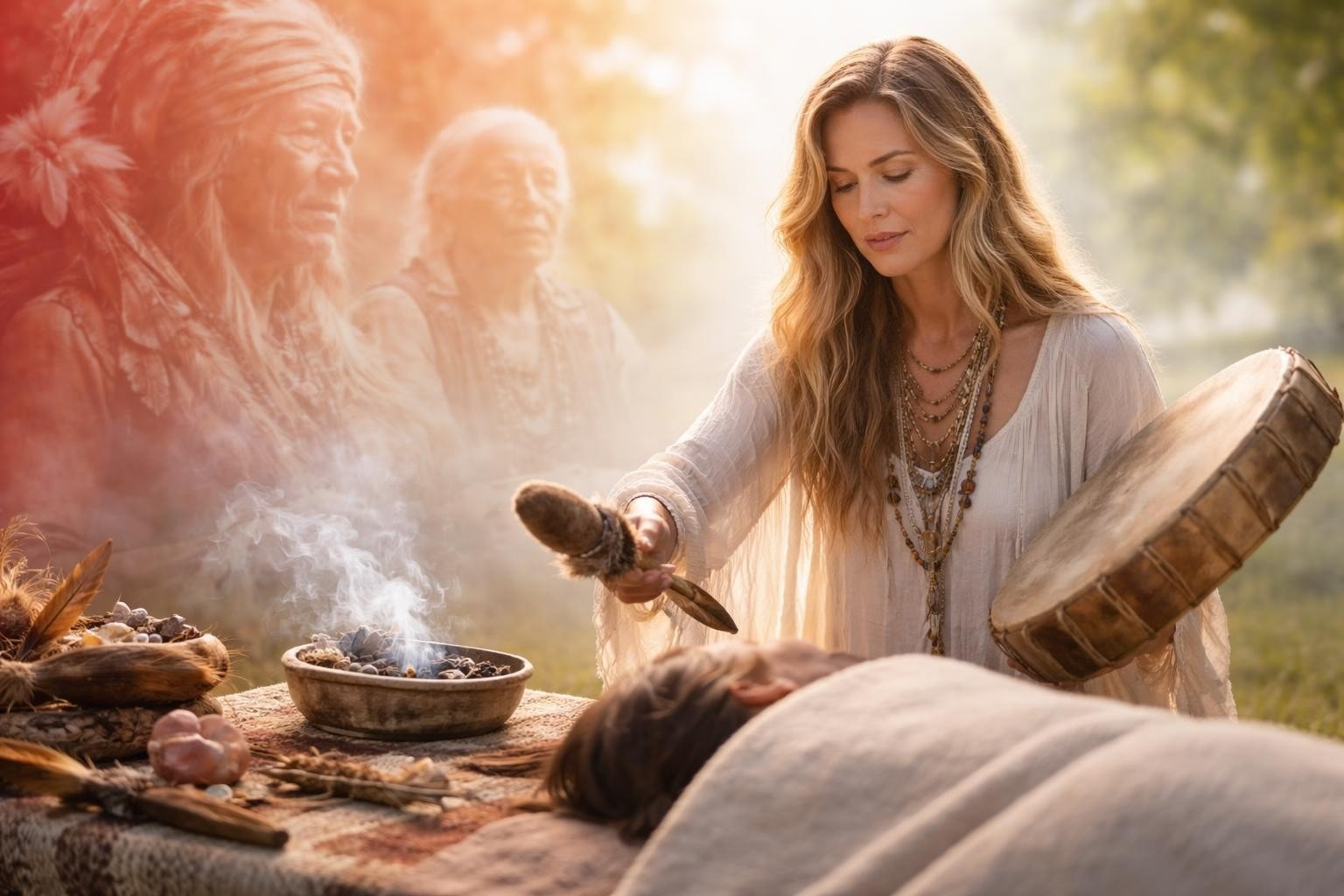
Shamanic Healer: Ancient Wisdom for Modern Healing
The ancient practice of shamanic healing has experienced a profound resurgence in modern spiritual communities, particularly among women seeking deeper connections to their ancestral roots and energetic bodies. A shamanic healer serves as a bridge between the physical and spiritual realms, facilitating transformative healing experiences that address not just surface-level symptoms but the root causes embedded in our energetic fields and lineages.
In 2026, this timeless practice continues to evolve, integrating traditional wisdom with contemporary understanding of trauma, energy work, and consciousness.
Understanding the Role of a Shamanic Healer
A shamanic healer operates from a fundamentally different paradigm than conventional practitioners. Rather than viewing illness or emotional distress as isolated incidents, these practitioners recognize interconnected patterns across physical, emotional, mental, and spiritual dimensions.
The work involves entering altered states of consciousness to access information and healing energies unavailable in ordinary awareness. Through techniques passed down through generations, a shamanic healer navigates spiritual territories to retrieve lost soul fragments, remove energetic blockages, and restore balance to the client's entire system.
Core Responsibilities and Practices
The primary functions of these spiritual practitioners extend far beyond simple energy clearing:
Conducting soul retrieval ceremonies to restore fragmented aspects of consciousness
Performing extraction work to remove intrusive energies or spiritual blockages
Facilitating ancestral healing and communication with lineage guides
Offering divination and spiritual guidance for life transitions
Creating sacred space for transformative healing experiences
According to research on shamanism as a clinical intervention, these practices are gaining recognition in medical literature for their therapeutic potential. The integration of ancient wisdom with modern healing modalities creates a comprehensive approach to wellness.

The Healing Process and Methodology
When working with a shamanic healer, clients enter a collaborative relationship that honors both individual sovereignty and spiritual guidance. The process typically begins with intention setting, where the practitioner and client clarify the healing focus.
Techniques and Modalities
Different cultural traditions inform various shamanic approaches. Shamanic healing sessions commonly incorporate several foundational elements:
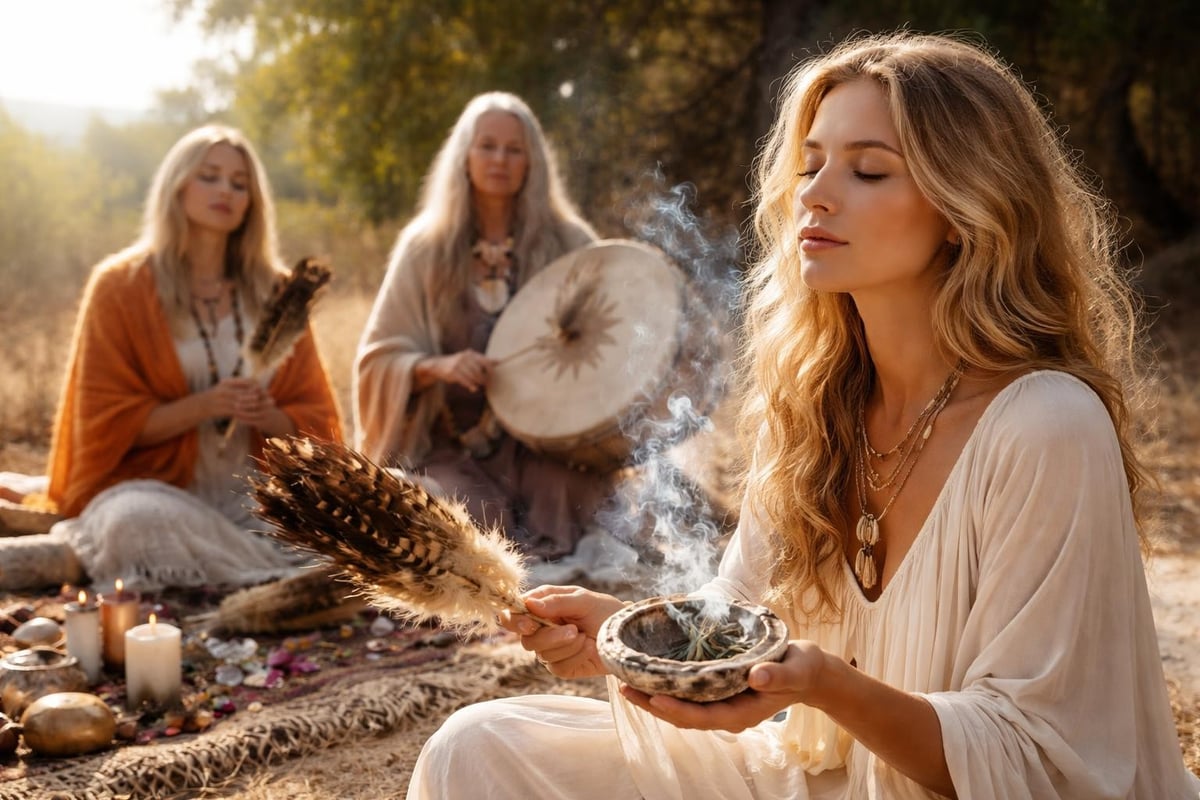
Journey Work- The practitioner enters trance states through drumming, rattling, or other rhythmic methods
Spirit Communication- Connection with helping spirits, power animals, or ancestral guides
Energy Clearing- Removal of stagnant or harmful energies from the client's field
Soul Retrieval- Recovery of vital essence lost through trauma or disconnection
Power Restoration- Returning spiritual strength and protective energies to the client
The concept of soul flight remains central to shamanic practice, where the healer's consciousness travels through non-ordinary reality to gather healing insights and energies. This journey work distinguishes shamanic healing from other energy-based modalities.
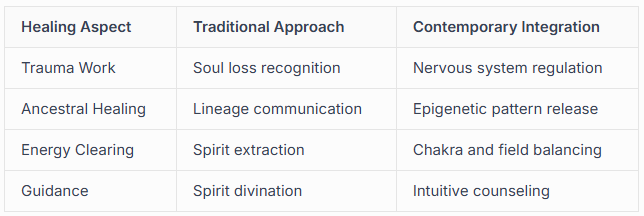
Shamanic Healing Across Cultural Contexts
The practice of shamanic healing manifests differently across global traditions, each offering unique perspectives and methodologies. Understanding these variations deepens appreciation for the universal principles underlying this work.
Mazatec shamanism in Mexico incorporates sacred plant medicines within ceremonial contexts, while Vegetalismo in the Peruvian Amazon emphasizes plant spirit wisdom and ayahuasca healing. African traditions like Ukuthwasa involve rigorous initiatory processes for becoming a traditional healer.
These diverse expressions share common threads:
Recognition of spiritual dimensions influencing physical health
Use of altered states to access healing wisdom
Honoring of ancestral knowledge and lineage connections
Understanding of energy as foundational to wellbeing
A shamanic healer in contemporary Western contexts often draws from multiple traditions while maintaining respect for cultural origins and avoiding appropriation. The focus remains on facilitating authentic healing experiences rather than superficial adoption of indigenous practices.
Generational Trauma and Shamanic Wisdom
One of the most powerful applications of shamanic healing in modern contexts involves addressing inherited trauma patterns. A shamanic healer recognizes that emotional wounds, limiting beliefs, and behavioral patterns often originate not in this lifetime but in ancestral experiences.
Through connection with lineage guides and ancestors, these practitioners facilitate healing that ripples backward and forward through family lines. This approach aligns with emerging understanding of how trauma imprints transfer through generations, affecting nervous system responses, relationship patterns, and self-worth.
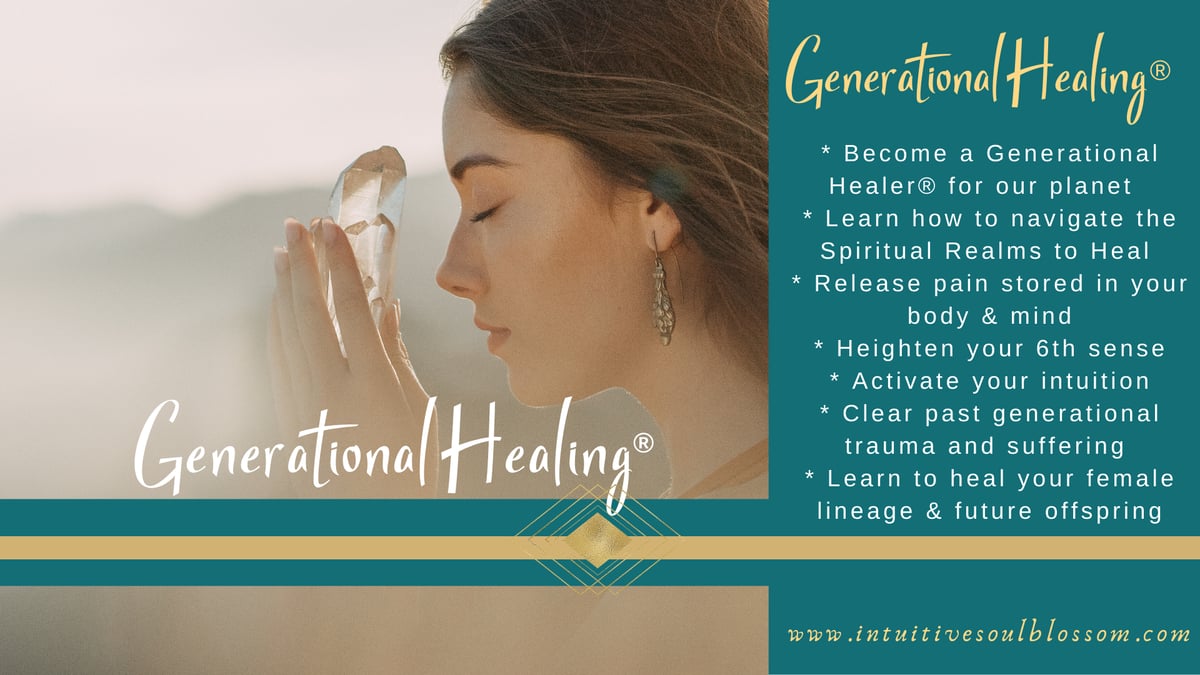
Women seeking to break cycles of inherited pain particularly benefit from this ancestral focus. By clearing energetic debris from the family line, a shamanic healer helps clients step into greater freedom and authentic expression. Generational healing work addresses these deep-rooted patterns, supporting women in releasing what was never theirs to carry.
Working with Feminine Energy and Motherhood
The shamanic perspective honors the profound spiritual dimensions of motherhood and feminine power. A shamanic healer working with women often facilitates reconnection with sacred feminine energies that have been suppressed or distorted through patriarchal conditioning and ancestral trauma.
This work becomes especially significant for women preparing for motherhood, navigating fertility challenges, or healing from pregnancy loss. The spiritual practitioner creates space for understanding soul-level dynamics between parent and child, offering clarity around conception timing and energetic preparation.

Choosing and Working with a Shamanic Healer
Selecting the right practitioner requires discernment and attention to inner guidance. Not all who claim shamanic abilities possess genuine training, ethical grounding, or effective healing capacity.
Essential Qualities to Seek
When evaluating potential practitioners, consider these factors:
Proper training and lineage- Has the healer undergone legitimate apprenticeship or training?
Ethical boundaries- Does the practitioner maintain professional standards and client safety?
Cultural respect- How does the healer honor traditional wisdom without appropriation?
Clear communication- Can they explain their process in accessible terms?
Personal integrity- Does their presence inspire trust and authenticity?
Red flags include promises of overnight transformation, reluctance to discuss methodology, or pressure to commit to extensive programs without trial sessions. A reputable shamanic healer respects client autonomy and provides clear information about their approach.
Preparing for Your Session
Maximizing the benefits of shamanic healing requires active participation and openness:
Set clear intentions for what you hope to address
Maintain hydration and avoid heavy meals before sessions
Create space for rest and integration afterward
Journal insights and experiences that emerge
Follow any pre-session guidance provided by your practitioner
The relationship between healer and client functions as partnership. While the shamanic healer facilitates access to spiritual resources, the client's willingness to engage with the process determines transformation depth.
The Integration of Shamanic and Modern Healing
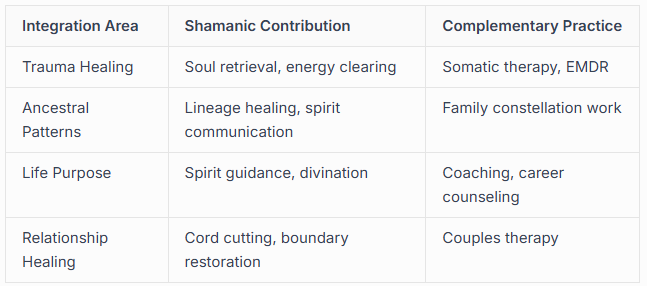
Contemporary shamanic healers increasingly collaborate with therapists, physicians, and other practitioners, recognizing that comprehensive wellness requires addressing multiple dimensions simultaneously. This integrative approach honors both ancient wisdom and modern understanding.
A shamanic healer might work alongside trauma therapists to address nervous system dysregulation, or coordinate with spiritual counselors to support clients exploring spirituality and intuition. The shamanic work often catalyzes breakthroughs that other modalities can then support and ground.
Soul-Level Healing Frameworks
The shamanic perspective recognizes multiple layers of human experience beyond the physical body. Soul therapy and spiritual guidance address these deeper dimensions, working with emotional, mental, spiritual, and soul bodies systematically.
A shamanic healer trained in these frameworks can identify which energetic layer requires attention and apply appropriate techniques. This precision prevents superficial healing that leaves root causes unaddressed.
Shamanic Healing for Women's Empowerment
The feminine journey toward wholeness often involves reclaiming power that was surrendered, stolen, or suppressed across generations. A shamanic healer specializing in women's healing understands the unique challenges women face in patriarchal systems and ancestral lineages.
This work addresses:
Self-worth wounds inherited from mothers and grandmothers
Relationship patterns rooted in ancestral trauma
Creative expression blocked by fear or shame
Intuitive abilities suppressed through conditioning
Spiritual connection severed by religious trauma
Through restoration of vital essence and reconnection with feminine power, women emerge from shamanic healing with renewed confidence, clarity, and purpose. The practitioner serves as witness and guide while the client reclaims her inherent sovereignty.
Supporting Conscious Motherhood
Women approaching motherhood from a spiritual perspective benefit profoundly from shamanic support. A shamanic healer can facilitate preparation that extends beyond the physical, addressing energetic readiness, ancestral patterns affecting parenting, and soul-level communication with incoming children.
This preparation creates foundation for conscious parenting and spiritual motherhood, where mothers raise children with awareness of energetic dynamics, generational healing opportunities, and soul purpose alignment.
Training and Becoming a Shamanic Healer
The path to becoming an authentic shamanic healer requires years of dedication, personal healing, and rigorous training. Unlike certification programs offering weekend credentials, legitimate shamanic training involves extended apprenticeship and deep personal transformation.
Traditional paths often include:
Multi-year apprenticeship with experienced practitioners
Extensive personal healing and shadow work
Development of relationships with helping spirits
Cultural immersion in specific shamanic traditions
Initiatory experiences and vision quests
Ongoing supervision and community accountability
Modern practitioners may also pursue complementary training in counseling, energy medicine, or somatic therapies to provide comprehensive support. The most effective shamanic healers combine traditional wisdom with contemporary psychological understanding.
Ethical Considerations and Cultural Sensitivity
As shamanic practices gain mainstream attention, questions of cultural appropriation and ethics become paramount. A responsible shamanic healer acknowledges the indigenous origins of these practices and avoids exploiting sacred traditions for profit.
Best practices include:
Honoring source traditions and teachers publicly
Avoiding costumes or props from cultures not one's own
Studying with legitimate teachers rather than books alone
Recognizing limitations and referring to cultural specialists when appropriate
Contributing back to indigenous communities preserving these traditions
The broader understanding of shamanism across cultures reveals universal human capacities for spiritual connection while respecting particular expressions rooted in specific communities and landscapes.
The Future of Shamanic Healing
As consciousness continues expanding globally, the role of the shamanic healer evolves to meet contemporary needs while preserving essential wisdom. The integration of ancient practices with modern trauma understanding, neuroscience, and energy medicine creates powerful synergies.
Women particularly are reclaiming these practices, bringing feminine perspectives to healing traditions that have sometimes emphasized masculine approaches. This rebalancing honors the receptive, intuitive, and nurturing aspects essential to shamanic work.
The shamanic healer of 2026 and beyond serves as bridge between worlds, translator of spiritual wisdom, and catalyst for transformation. By addressing the energetic and ancestral roots of suffering, these practitioners complement conventional approaches and facilitate healing at depths previously inaccessible.
For those called to this work, whether as practitioners or clients, the shamanic path offers profound opportunities for growth, healing, and service. The ancient wisdom encoded in these practices remains as relevant today as ever, perhaps more so in a world hungry for authentic spiritual connection and deep healing.
Shamanic healing offers powerful pathways for addressing the deep ancestral and energetic patterns that shape our lives, particularly for women seeking to break generational cycles and step into their authentic power.
If you feel called to explore how ancient wisdom can support your healing journey,Intuitive Soul Blossom LLCprovides specialized spiritual guidance integrating generational healing, soul therapy, and intuitive support to help you reclaim your feminine power and create lasting transformation.