Infant Loss Grief: A Guide to Healing and Hope
The loss of an infant creates a grief unlike any other. Whether through miscarriage, stillbirth, or the death of a newborn, infant loss grief carries unique dimensions that challenge both emotional and spiritual foundations. Parents navigating this devastating experience often find themselves searching for meaning, connection, and healing while honoring the profound bond they share with their baby.
Understanding the multifaceted nature of infant loss grief opens pathways to healing that acknowledge both the physical loss and the eternal soul connection that transcends earthly time.
The Unique Nature of Infant Loss Grief
Infant loss grief differs fundamentally from other forms of bereavement because it involves mourning not just who a child was, but who they would have become. This grief encompasses lost dreams, unfulfilled plans, and an entire future that will never materialize in the physical realm. The pain extends beyond personal loss to affect relationships, identity, and one's sense of purpose in profound ways.
Why Infant Loss Grief Feels Different
Parents experiencing infant loss often describe feeling invisible in their grief. Society sometimes minimizes their pain with well-intentioned but harmful phrases like "at least you can have another baby" or "everything happens for a reason." These responses fail to acknowledge the irreplaceable nature of each soul and the depth of the parent-child bond that forms before and during pregnancy.
The physical aspects of infant loss grief add additional layers of complexity:
Mothers may still experience physical symptoms of pregnancy or lactation after loss
Hormonal shifts compound emotional distress during an already vulnerable time
The absence of tangible memories can make grief feel abstract to others
Anniversary dates and due dates trigger renewed waves of mourning
Subsequent pregnancies carry both hope and fear in equal measure

Research indicates that parental grief following infant death in the NICU follows distinct patterns influenced by circumstances surrounding the loss, support systems, and individual coping mechanisms. Understanding these patterns helps validate the experience and normalize the wide range of emotions that surface.
Emotional Waves and Grief Stages
Infant loss grief rarely follows a linear path. Instead, it moves in waves, with intense periods of pain followed by moments of relative calm, only to be triggered again by unexpected reminders. This cyclical nature can feel destabilizing, especially when society expects grief to resolve within a specific timeframe.
Common Emotional Experiences
The emotional landscape of infant loss grief includes feelings that may seem contradictory or overwhelming. Parents often experience multiple emotions simultaneously, creating an internal complexity that defies simple explanation.
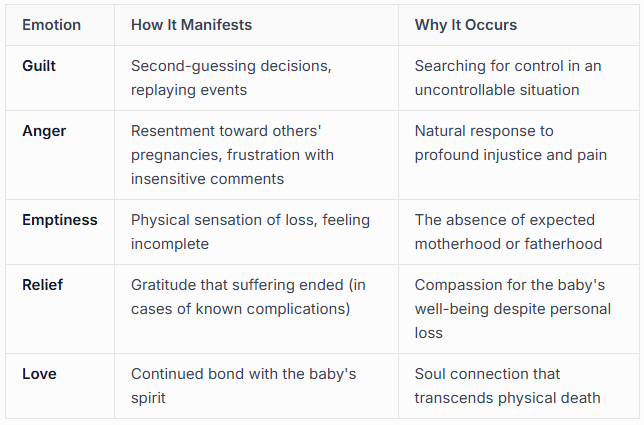
Many parents find that healing emotions requires honoring all these feelings without judgment. The spiritual dimension of grief acknowledges that love and connection persist beyond physical separation, offering comfort while validating the pain of earthly loss.
The Spiritual Dimension of Infant Loss
From a soul perspective, infant loss grief carries profound spiritual significance. The baby's soul chose to connect with you, even if briefly, for reasons that may unfold over time. This doesn't minimize the pain or suggest the loss was "meant to be" in a fatalistic sense. Rather, it honors the sacred nature of the soul contract between parent and child.
Soul Connections Beyond Physical Time
Spirit babies exist on a soul level before conception and continue their existence after physical death. Some parents report feeling their baby's presence, receiving signs, or experiencing dreams that bring comfort and connection. These experiences aren't imagination or wishful thinking but genuine spiritual communication that validates the ongoing relationship.
Understanding your baby's soul journey can provide clarity and comfort during the grieving process. Spirit baby readings offer women processing miscarriage or loss the opportunity to gain soul-level insight into their baby's purpose, messages, and the energetic relationship that continues beyond physical life. These sessions honor both the grief and the eternal connection, providing spiritual understanding that complements emotional healing.
The spiritual perspective on infant loss grief recognizes several key truths:
Your baby's soul is eternal and continues to exist
The love between you transcends physical boundaries
Your baby may return to your family in another form or time
The grief you feel honors the significance of the connection
Healing doesn't mean forgetting or diminishing the relationship
Navigating Complicated Grief
While all infant loss grief is complex, some parents develop what clinicians call complicated grief, characterized by persistent, intense symptoms that interfere with daily functioning. Research on risk and protective factors shows that understanding these patterns helps identify when additional support may be beneficial.
Signs You May Need Additional Support
Grief is deeply personal, and there's no "right" timeline for healing. However, certain signs indicate that professional support or specialized grief resources could be helpful:
Inability to function in daily life six months or more after the loss
Persistent thoughts of self-harm or worthlessness
Complete avoidance of anything related to babies or pregnancy
Inability to experience any positive emotions or hope
Severe disruption in relationships or isolation from all support systems
These symptoms don't indicate weakness or insufficient love for your baby. They signal that your nervous system and emotional body need specialized care to process trauma and grief in a healthy way.
Building Your Support Network
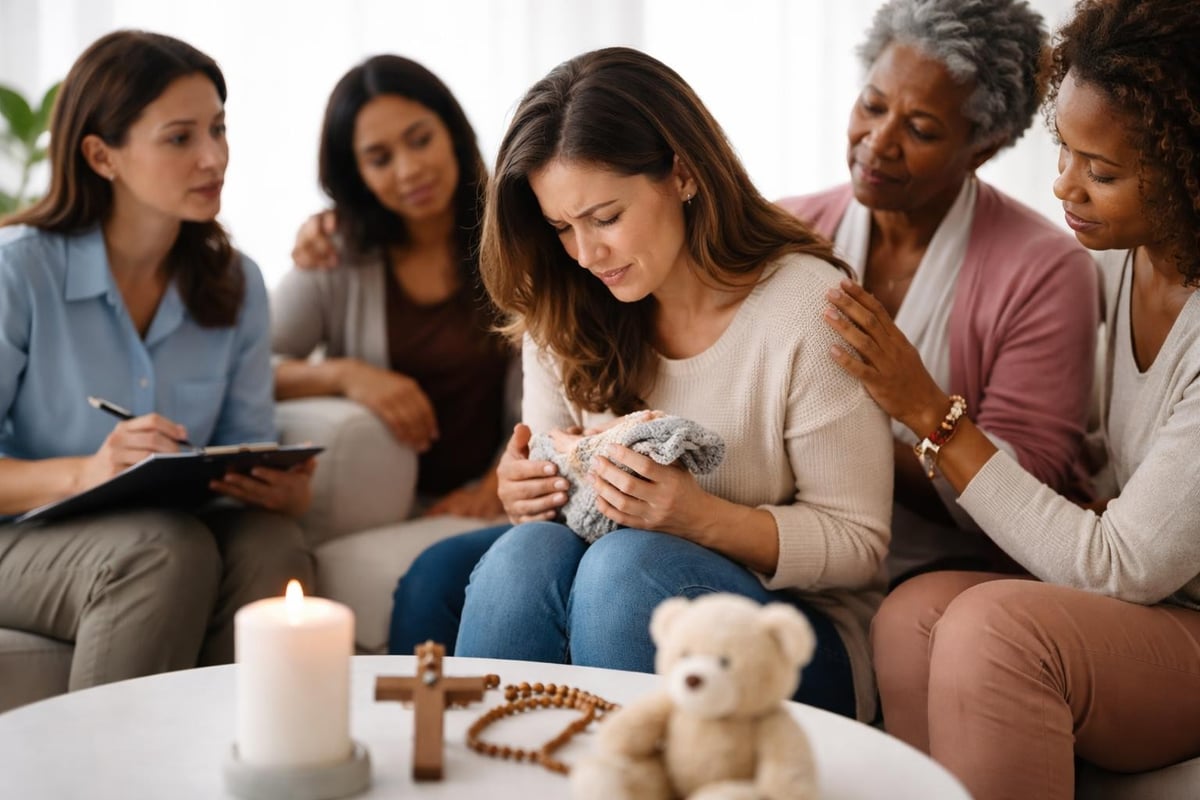
Healing from infant loss grief requires connection, not isolation. While the impulse to withdraw is natural and sometimes necessary for initial processing, sustained healing happens within community and relationship. Building a support network that understands the unique nature of this loss creates space for authentic grief expression.
Types of Support That Help
Different forms of support serve different needs during the grief journey. A comprehensive approach includes both peer connection and professional guidance:
Peer Support Options:
Specialized infant loss support groups where parents share experiences
Virtual peer support groups that connect you with others who understand
Online communities that provide 24/7 connection and validation
Friendships with others who have experienced similar losses
Professional and Spiritual Support:
Licensed therapists specializing in pregnancy and infant loss
Energy healing sessions that address grief held in the body
Spiritual guidance that honors soul connections
Medical professionals who understand the physical aspects of loss
Organizations like The Baby Spirit Foundation offer structured grief support including email series that guide families through early grief stages with compassion and understanding. These resources complement personal support systems and professional care.
Honoring Your Baby's Memory
Creating meaningful ways to honor your baby's memory serves multiple purposes in the grief journey. Memorial practices acknowledge the reality of your baby's existence, provide tangible expressions of love, and create touchstones for ongoing connection.
Memorial Practices That Nurture Connection
Physical Memorials: Plant a tree, create a garden space, or establish a special place in your home dedicated to your baby's memory
Creative Expression: Write letters to your baby, create artwork, or compose music that expresses your love and grief
Ritual Observances: Mark significant dates with ceremonies that honor your baby's soul and your continuing bond
Acts of Service: Support other grieving parents, donate to infant loss organizations, or volunteer in ways that honor your baby's legacy
Spiritual Practices: Meditation, prayer, or energetic connection that maintains awareness of your baby's soul presence
These practices don't keep you stuck in grief but rather integrate your baby into your ongoing life story in healthy, meaningful ways. The goal isn't to "move on" but to move forward while maintaining connection.
Generational Patterns and Infant Loss
Infant loss often intersects with deeper generational patterns carried through family lines. Many women discover that pregnancy loss, infant death, or difficulties with motherhood appear repeatedly across generations, suggesting inherited trauma and unresolved emotional patterns stored in the family lineage.
Breaking Cycles Through Awareness
Understanding generational healing in the context of infant loss grief reveals how ancestral wounds may influence current experiences. This doesn't mean you caused the loss through unhealed trauma, but rather that healing your grief can transform patterns for future generations.
Generational patterns related to infant loss may include:
Unspoken grief that was never processed by previous generations
Cultural or religious beliefs that prevented authentic mourning
Trauma responses passed down through epigenetic inheritance
Suppressed feminine power and disconnection from intuitive knowing
Patterns of unworthiness or fear around motherhood
Addressing these deeper layers supports both personal healing and prevents transmission of unresolved grief to future generations. Working with spiritual guidance focused on generational patterns helps identify and release these inherited wounds while honoring your individual grief experience.
Moving Forward Without Moving On
The concept of "moving on" from infant loss grief misrepresents the nature of healing. You don't move on from your baby or stop loving them. Instead, you learn to integrate the loss into your life narrative while maintaining spiritual connection and allowing joy to coexist with sadness.
What Healing Actually Looks Like
Healing from infant loss grief involves specific shifts in how you experience and relate to the loss over time:
The intensity of pain decreases, though love remains constant
Grief episodes become less frequent and shorter in duration
You can think about your baby with both sadness and peace
Other emotions beyond grief become accessible again
Purpose and meaning emerge from the experience
You can support others while honoring your own journey
Hope for the future doesn't feel like betrayal of your baby
This transformation doesn't happen on a predetermined timeline. Some parents find significant shifts within the first year, while others need several years to reach this integration. Both timelines are valid and normal.
Resources for Continued Support
Accessing quality resources throughout your grief journey provides ongoing support as needs change and evolve. Different stages of grief benefit from different types of resources, and what helps initially may shift as healing progresses.
Comprehensive grief support resources tailored to families experiencing sudden infant loss include materials for various family members, recognizing that grief impacts entire family systems. The SUDC Foundation curates specialized resources including blogs, support groups, and organizations dedicated to families after sudden unexpected infant death.
For families in specific regions, localized support provides community connection and practical assistance. Infant Loss Resources offers one-on-one support and educational services to families in Missouri and surrounding areas, demonstrating the value of both peer connection and professional guidance.
The Role of Spirituality in Healing
Spirituality offers unique comfort in infant loss grief by addressing questions that medical or psychological frameworks cannot answer. Where is my baby now? Do they know I love them? Will I see them again? These soul-level questions require spiritual exploration and intuitive connection to find personally meaningful answers.
Developing Spiritual Connection
Whether you identify with a specific religious tradition or practice personal spirituality, developing intentional connection with your baby's soul creates ongoing relationship. This might include:
Daily Practices:
Morning meditation focusing on soul connection
Evening gratitude for your baby's presence in your life
Prayer or intention-setting that honors the bond
Journaling conversations with your baby's spirit
Deepening Awareness:
Learning to recognize signs and synchronicities
Trusting intuitive messages and dreams
Opening to subtle energetic communication
Releasing doubt about spiritual experiences
Many parents worry that moving forward means forgetting or betraying their baby. Spiritual connection assures you that love transcends physical death and that honoring your baby while embracing life serves their highest good and yours.
Partner Grief and Relationship Impact
Infant loss grief affects partnerships profoundly, often in divergent ways. Partners may grieve differently, express emotions on different timelines, or have conflicting needs around processing the loss. These differences can create distance and misunderstanding during an already vulnerable time.
Navigating Grief Together
Supporting your relationship while honoring individual grief experiences requires conscious communication and mutual compassion. Understanding that there's no "right" way to grieve helps partners extend grace to each other's unique processes.
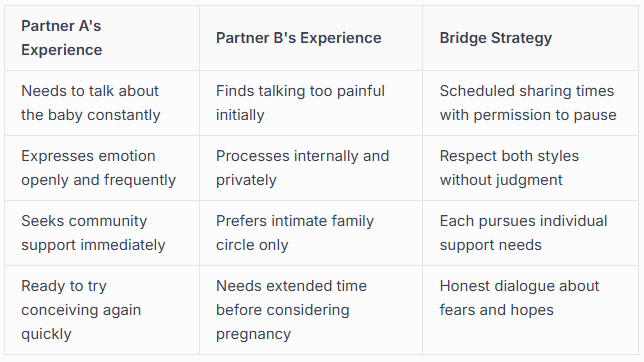
The key to navigating partner grief involves remembering you're on the same team facing a common tragedy, even when expressions differ. Regular check-ins, therapy for couples, and explicit discussion of needs prevent assumptions and resentment.
Subsequent Pregnancy After Loss
Deciding whether and when to pursue another pregnancy after infant loss involves complex emotional, physical, and spiritual considerations. There's no correct answer, and the decision remains deeply personal to each family's circumstances and readiness.
Pregnancy After Loss Considerations
Subsequent pregnancies carry both profound hope and significant anxiety. Parents often describe feeling torn between excitement and fear, struggling to bond while protecting their hearts from potential pain. This paradox creates unique challenges throughout pregnancy and beyond.
Many parents benefit from specialized support during pregnancy after loss, including:
High-risk pregnancy care with compassionate providers
Mental health support for anxiety and trauma responses
Spiritual guidance that honors both babies' souls
Peer communities of parents in similar circumstances
Permission to feel all emotions without guilt
Understanding that a subsequent baby isn't a replacement but rather a different soul with their own journey helps navigate the complexity. Your grief for your lost baby and love for a new baby can coexist authentically.
Self-Compassion in Grief
Infant loss grief often triggers harsh self-judgment and relentless questioning. Parents mentally replay events, searching for what they could have done differently, holding themselves responsible for circumstances beyond their control. This self-blame intensifies suffering and blocks healing pathways.
Practicing Radical Self-Compassion
Self-compassion doesn't mean dismissing accountability where genuine responsibility exists. Rather, it means treating yourself with the same kindness you'd offer a dear friend facing similar circumstances. This practice transforms the internal dialogue from judgment to support.
Self-Compassion Practices:
Notice self-critical thoughts without engaging them
Speak to yourself with gentle, loving language
Acknowledge that you did the best you could with available information
Recognize that grief doesn't follow logic or fairness
Allow yourself to be imperfect in your grieving process
Working through feelings of being stuck in difficult emotions requires releasing self-blame and embracing the truth that infant loss happens despite loving preparation, healthy choices, and fervent prayers. You are not being punished, and your baby's death was not your fault.
Infant loss grief transforms you in ways both painful and profound, teaching you about love's eternal nature while demanding you navigate unimaginable loss. Healing this grief requires patience, support, spiritual connection, and compassionate acknowledgment of both the pain and the continuing bond you share with your baby's soul.
Intuitive Soul Blossom LLC offers specialized spiritual guidance for mothers processing infant loss, providing spirit baby readings, generational healing sessions, and soul therapy that honor your grief while supporting deep healing and spiritual connection with your baby.