How to Heal Emotions: A Soul-Level Guide
Learning how to heal emotions goes deeper than surface-level feelings. Emotional wounds run through our family lineages, childhood experiences, and spiritual connections, creating patterns that impact our relationships, motherhood journeys, and sense of self-worth. Learning this requires more than temporary coping strategies-it demands a comprehensive approach that addresses the root causes stored in our energetic bodies and ancestral lines.
When we commit to genuine emotional healing, we unlock profound transformation that ripples through every area of our lives. This is why understanding how to heal emotions requires more than temporary coping strategies.
How to Heal Emotions at Every Layer
When you begin to understand how to heal emotions, you start to see how deeply interconnected they are. They're interconnected with our mental patterns, physical sensations, and spiritual experiences.
When we explore emotions healing, we must recognize that unprocessed feelings create energetic imprints that can remain dormant for years or even pass through generations. These imprints influence our nervous system responses, trigger patterns, and subconscious beliefs about safety, worthiness, and belonging.
The Role of Ancestral Trauma in Emotional Health
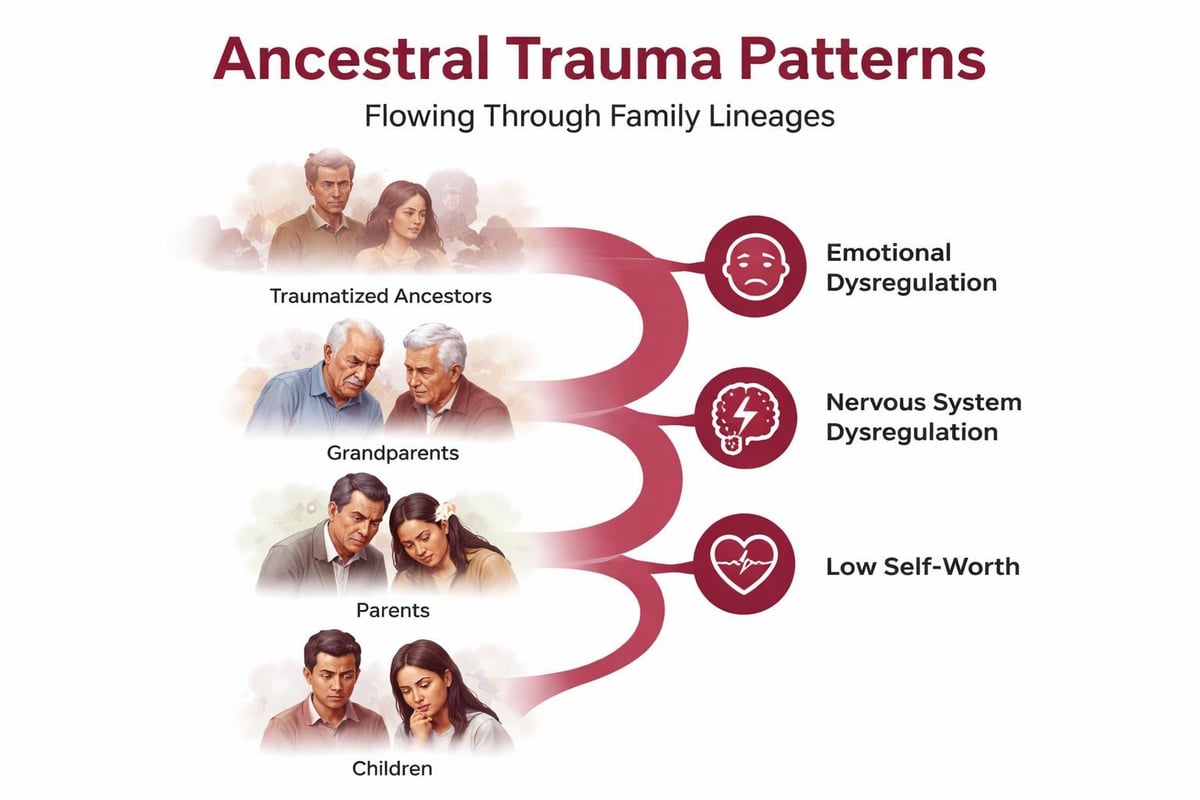
Generational trauma shapes our emotional landscape in ways we rarely acknowledge. The fears, grief, and survival patterns our ancestors experienced become encoded in our family lineage, affecting how we process emotions today.
Key characteristics of inherited emotional patterns include:
Unexplained anxiety or depression without a clear personal trigger
Repeated relationship dynamics across family members
Physical responses to emotional situations that feel disproportionate
Difficulty with emotional regulation despite conscious effort
Patterns around motherhood, money, or self-expression that mirror family history
Understanding these inherited patterns provides crucial context for healing from past emotional trauma and breaking cycles that no longer serve us.
Reconnecting with Your Inner Child
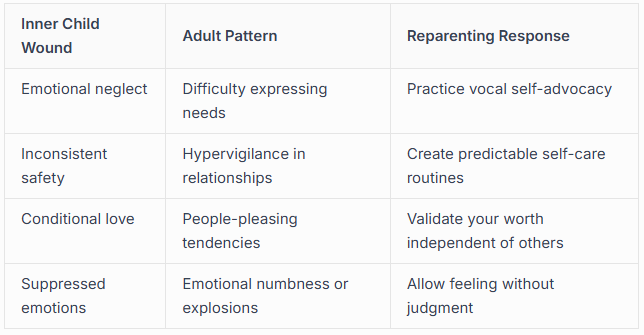
One of the most powerful pathways for emotional healing involves working with the inner child-the part of ourselves that holds our earliest emotional experiences and unmet needs.
Inner child healing addresses the root of many adult emotional challenges. When childhood needs for safety, validation, or love go unmet, we develop protective mechanisms that continue into adulthood, often creating the very patterns we wish to change.
The Practice of Reparenting
Reparenting allows us to provide ourselves with the emotional nourishment we may not have received as children. This therapeutic approach involves becoming the loving, attuned parent to our own inner child.
The reparenting process includes several foundational steps:
Acknowledge your inner child's existence and pain
Identify specific unmet needs from childhood
Practice self-compassion when emotional triggers arise
Establish new internal dialogues that offer reassurance
Create rituals that honor your emotional needs
Set boundaries that protect your emotional well-being
Women healing from childhood wounds often discover that their motherhood journey or relationship patterns mirror their own unmet childhood needs. This awareness becomes the first step toward transformation.
Energy Healing for Emotional Release
The energetic body holds emotional information that talk therapy alone cannot always access. Energy healing modalities work with the subtle body systems to release stored emotions and restore flow.
When exploring how to heal emotions through energy work, we address blockages in the chakra system, auric field, and meridian pathways. These blockages often correspond to specific emotional themes and life areas.
Working with the Emotional Body
The emotional body is one of several energetic layers surrounding the physical form. Trauma, unexpressed feelings, and inherited patterns create densities within this field that affect our emotional responses and overall well-being.
Signs your emotional body needs healing:
Feeling emotionally reactive or numb without clear cause
Experiencing emotions that don't match current circumstances
Difficulty releasing feelings even after processing them mentally
Physical sensations tied to specific emotional states
Repetitive emotional cycles that resist change
Soul Therapy Sessions offer a structured approach to clearing these energetic imprints. Soul Therapy Sessions & Programs work systematically through each energy body-emotional, mental, physical, spiritual, and soul-to restore wholeness and clarity from the deepest levels.

Nervous System Regulation as Emotional Foundation
True emotional healing requires a regulated nervous system. When our nervous system remains in survival states-fight, flight, freeze, or fawn-we cannot access the higher brain functions needed for emotional processing and integration.
Understanding Your Window of Tolerance
The window of tolerance describes the optimal zone of nervous system arousal where we can effectively process emotions. Outside this window, we become either hyperaroused (anxious, reactive) or hypoaroused (numb, disconnected).
Learning how to heal emotions includes expanding this window through consistent practice:
Identify your current nervous system state throughout the day
Notice what triggers dysregulation (moving outside your window)
Practice co-regulation through safe relationships
Use somatic techniques to return to center
Build capacity gradually through small challenges
Women working on healing their inner child often discover that their nervous system learned dysregulation patterns in childhood. These patterns continue until we consciously rewire them through repeated experiences of safety.
Spiritual Practices for Emotional Wholeness
Spiritual connection provides essential support for emotional healing. When we align with our soul's wisdom, we access perspective that transcends our current pain and connects us to larger truths about our journey.
Meditation and Mindfulness for Emotional Circulation
Mindfulness techniques for healing the inner child create space between stimulus and response, allowing us to witness emotions without becoming overwhelmed by them.
Daily mindfulness practices that support emotional healing:
Morning meditation to set intentional emotional tone
Body scans to identify where emotions live physically
Breath work to move stuck emotional energy
Loving-kindness practice for self-compassion
Evening reflection to process the day's emotional experiences
These practices don't suppress or bypass emotions; instead, they create the container within which emotions can be fully felt, expressed, and released.
Prayer and Intention Setting
Prayer, whether directed to Source, ancestors, or your higher self, opens channels for emotional healing beyond what we can accomplish through willpower alone. Setting clear intentions for emotional healing invites spiritual support into the process.
Consider framing intentions around specific emotional patterns: "I am healing my relationship with anger," or "I welcome the release of inherited grief that no longer serves me." These intentions create energetic pathways for transformation.
Breaking Generational Patterns
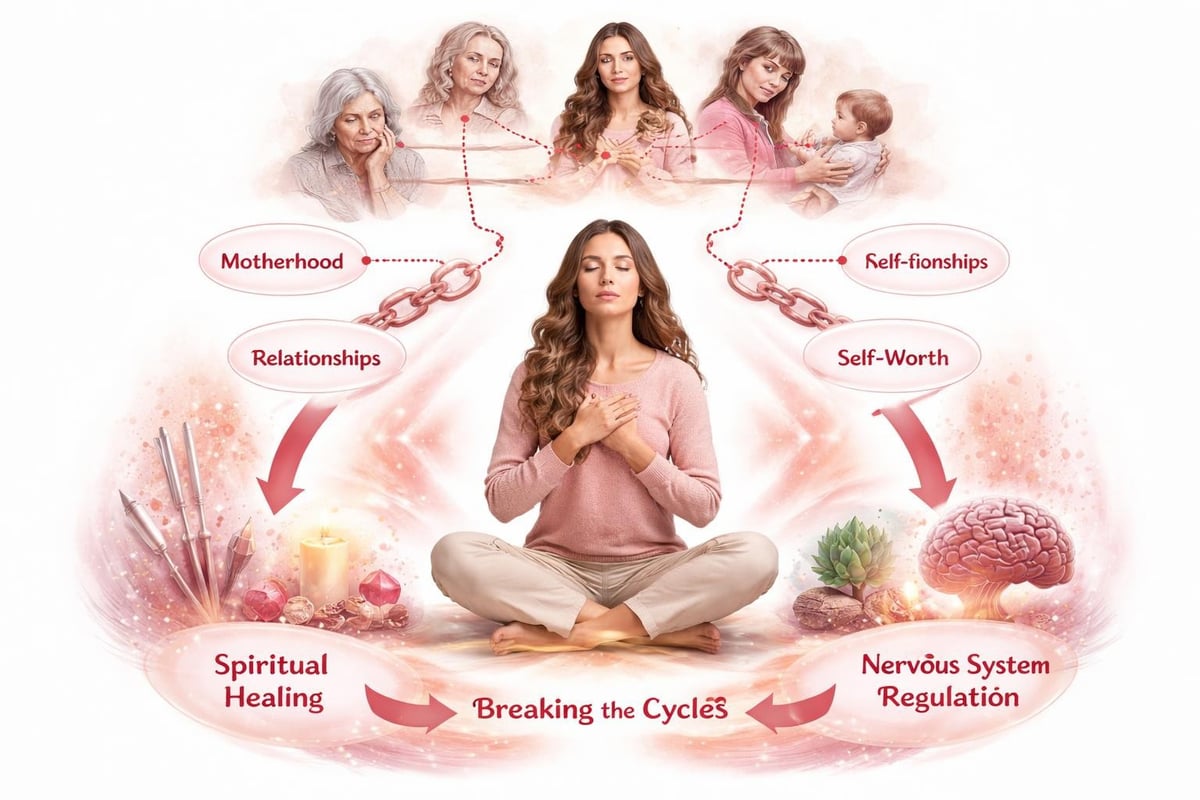
Understanding how to heal emotions requires examining patterns that extend beyond our individual experience. Generational healing addresses the inherited emotional blueprints that shape our responses, relationships, and self-perception.
Identifying Inherited Emotional Patterns
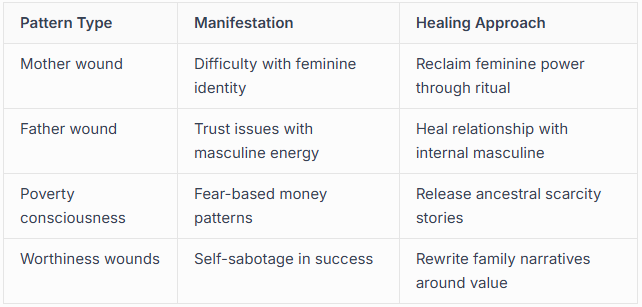
Many women discover that their emotional challenges mirror those of their mothers, grandmothers, and female ancestors. These patterns might involve:
Difficulty receiving love or support
Suppression of anger or authentic expression
Anxiety around motherhood or feminine power
Scarcity mindset related to abundance or worthiness
Relationship patterns that repeat across generations
Parenting approaches that support emotional growth become particularly important when we recognize how our own emotional patterns may impact our children. Breaking these cycles becomes an act of love for both ourselves and future generations.
The Role of Ritual in Generational Healing
Rituals create sacred space for releasing ancestral burdens and honoring the strength of our lineage. Simple practices like lighting a candle for ancestors, journaling letters to past generations, or creating family altars support this deep work.
These practices acknowledge that healing happens across time and space. When we heal our emotional wounds, we simultaneously heal aspects of our lineage and protect future generations from carrying the same patterns.
Somatic Approaches to Emotional Processing
The body stores emotional memory in ways that bypass cognitive awareness. Somatic practices access these stored emotions through physical sensation, movement, and body-based awareness.
Releasing Emotions Through Movement
Emotions carry kinetic energy-they're designed to move through us, not remain stuck. When we learn how to heal emotions somatically, we honor this natural flow.
Effective somatic practices include:
Shaking or tremoring to release nervous system activation
Intuitive dance to express and move emotional energy
Yoga flows that target specific emotional holding patterns
Breathwork that activates the parasympathetic nervous system
Sound healing through toning or humming
Women working through motherhood challenges, conception journeys, or relationship patterns often find that somatic practices release emotions that mental processing alone cannot reach.
Creating Your Emotional Healing Practice
Sustainable emotional healing requires consistent practice rather than one-time interventions. Building a personalized routine supports ongoing transformation and prevents re-accumulation of emotional wounds.
Daily Practices for Emotional Maintenance
Morning grounding ritual (5-10 minutes)
Set intention for emotional awareness
Connect with breath and body
Invoke spiritual support
Midday check-in (2-3 minutes)
Notice current emotional state
Identify any arising triggers
Practice brief regulation technique
Evening release practice (10-15 minutes)
Journal about emotional experiences
Use movement or breathwork to release
Express gratitude for emotional growth
Weekly deep work (30-60 minutes)
Extended meditation or energy clearing
Inner child dialogue or visualization
Ritual for releasing specific patterns
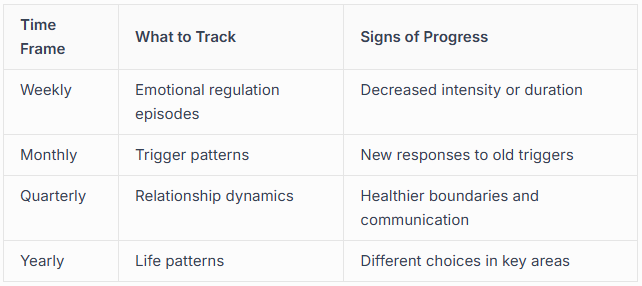
Tracking Your Emotional Healing Progress
Progress in emotional healing isn't always linear. Creating markers helps recognize growth even during challenging periods:
The Role of Community and Support
While personal practice forms the foundation, healing in isolation limits our growth. Safe community and skilled guidance accelerate emotional healing through witnessing, reflection, and co-regulation.
Finding the Right Support
Healing childhood wounds often requires professional support from therapists, energy healers, or spiritual guides who understand the multilayered nature of emotional work.
Consider what type of support aligns with your healing needs:
Energy healing sessions for clearing inherited trauma and energetic blockages
Therapy for processing specific traumatic events
Spiritual guidance for connecting emotional healing to soul purpose
Group healing circles for community support and shared witnessing
Somatic practitioners for body-based trauma release
The right support honors both the psychological and spiritual dimensions of emotional healing, recognizing that we are multidimensional beings requiring holistic care.
Integrating Emotional Healing into Motherhood
For mothers and women preparing for motherhood, learning how to heal emotions becomes doubly important. Unresolved emotional patterns directly impact our children through nervous system co-regulation and inherited energetic imprints.
Conscious Motherhood as Healing Path
Motherhood surfaces every unhealed aspect of ourselves. While challenging, this creates profound opportunity for transformation. When we commit to our emotional healing, we simultaneously create healthier emotional templates for our children.
Key areas where maternal emotional healing impacts children:
Emotional regulation modeling and nervous system co-regulation
Attachment security based on parent's emotional availability
Inherited trauma patterns that either continue or break with this generation
Permission for authentic emotional expression
Relationship with feminine power and worthiness
Women who heal their inner child before or during motherhood find they can offer their children the emotional attunement they themselves may not have received.
The Ongoing Journey of Emotional Healing
Emotional healing isn't a destination but a continuous journey of deepening self-awareness, compassion, and wholeness. Each layer we heal reveals another opportunity for growth and integration.
Understanding how to heal emotions evolves as we do. The practices that serve us in one season may shift as we grow. Remaining curious and compassionate with ourselves throughout this journey honors the courage it takes to face our deepest wounds.
The transformation available through committed emotional healing extends far beyond symptom relief. It opens pathways to authentic self-expression, purposeful living, empowered relationships, and connection to our soul's deepest knowing. This work reclaims not just our emotional well-being but our fundamental right to live fully, love deeply, and create from a place of wholeness rather than woundedness.
Emotional healing is sacred work that transforms not only your present but ripples through your entire lineage and future generations. Whether you're processing ancestral trauma, preparing for conscious motherhood, or seeking to reclaim your authentic emotional self, this journey requires both courage and support.
Intuitive Soul Blossom LLC offers specialized guidance through generational healing sessions, soul therapy, and spiritual support designed specifically for women ready to heal at the deepest levels and step into their feminine power. Begin your transformative healing journey today.