
Trauma and the Soul: A Guide to Spiritual Healing
When something painful happens, we don't just carry the memory in our minds. The wound travels deeper, settling into the very fabric of who we are. This is where trauma and the soul meet, in that sacred space where our experiences shape not just our thoughts or behaviors, but our fundamental sense of self and spiritual essence.
Understanding this connection can transform how we approach healing, moving beyond surface symptoms to address the profound spiritual disruption that trauma creates.
What Trauma and the Soul Reveals About Spiritual Wounding
Trauma isn't merely a psychological event. It's a spiritual interruption that affects the soul's natural expression and growth.
When we experience overwhelming situations, especially in childhood or across generations, our soul responds by creating protective mechanisms. These defenses, while keeping us functional, can also fragment our connection to our true essence. The relationship between trauma and the soul has been explored by scholars and healers alike, with Donald Kalsched's groundbreaking work on trauma and the soul offering profound insights into how dissociation protects but also imprisons our spiritual core.
The Soul's Response to Overwhelming Experience
Your soul knows what happened before your conscious mind can process it. This knowing creates an energetic imprint that lives in your field long after the initial event.
When trauma occurs, the soul responds in several ways:
It fragments to protect the innocent, vulnerable parts of self
It creates internal guardians that prevent further wounding
It stores the experience energetically in the body and lineage
It disconnects from full presence to manage unbearable feelings
These protective responses make perfect sense. They allowed you to survive. Yet they also create a barrier between you and your wholeness, keeping your soul's light dimmed to avoid the pain of being fully present.

How Generational Patterns Affect Trauma and the Soul
Trauma doesn't exist in isolation. It ripples through family lines, creating patterns that affect multiple generations.
Your soul carries not only your own experiences but also the unresolved wounds of your ancestors. This is why you might feel anxious in situations your grandmother faced, or struggle with patterns your mother never healed. The connection between trauma and the soul extends backward and forward through your lineage.
When we examine intergenerational trauma, we see how survival strategies become encoded in family systems. A great-grandmother who experienced loss might pass down patterns of emotional unavailability. A grandfather who endured scarcity might transmit beliefs about unworthiness that affect how you relate to abundance.
Recognizing Inherited Soul Wounds
Sometimes the heaviest burdens we carry aren't even ours. They belong to the lineage.
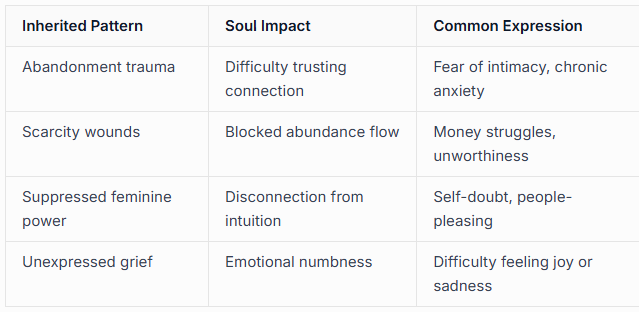
These patterns live in your energy field until they're consciously addressed. Generational healing work creates space for your soul to release what was never yours to carry, freeing both you and future generations.
The Spiritual Dimensions of Trauma and the Soul
Approaching trauma and the soul from a spiritual perspective reveals dimensions that purely psychological models might miss.
Your soul exists beyond the physical body, holding the blueprint of who you truly are. When trauma occurs, it distorts this blueprint, creating energetic blocks that affect how life force moves through you. This is why someone can do years of talk therapy yet still feel disconnected or stuck. The healing hasn't reached the soul level where the deepest imprints reside.
Spiritual healing perspectives emphasize the importance of presence and compassion in restoring wholeness. Rather than fixing or analyzing, this approach invites us to witness what is, creating safe space for the soul to emerge from hiding.
The Sacred Self System
Within each of us lives what some call the "sacred self" or true essence. This is the part that remains untouched by trauma, pure and whole.
Trauma creates what feels like an impenetrable wall between our wounded self and this sacred essence. We develop what Kalsched describes as an inner protector-persecutor that both guards our innocence and prevents us from accessing it. This system keeps us safe but also keeps us small.
The healing journey involves:
Recognizing the protective patterns without shame
Understanding their original purpose and wisdom
Creating enough safety to soften these defenses
Reuniting with the parts of soul that were split off
Integrating the fragmented aspects back into wholeness
This process cannot be rushed. The soul moves at its own pace, revealing what you're ready to hold with compassion. Working with experienced guides in soul-level healing can provide the witnessing presence needed for this delicate unfolding.

Healing Trauma and the Soul Through Energy and Presence
Energy healing offers unique pathways for addressing trauma and the soul because it works directly with the subtle bodies where spiritual wounds reside.
Your physical body holds trauma in muscle memory and the nervous system. Your emotional body carries unprocessed feelings. Your mental body stores limiting beliefs and stories. But it's in the spiritual and soul bodies where the deepest imprints exist, the places where your essential nature was interrupted.
Different Energy Bodies and Trauma Storage
Understanding how trauma and the soul interact across multiple dimensions helps target healing more effectively.
Emotional Body: Holds unexpressed feelings and emotional patterns from this lifetime and the lineage
Mental Body: Stores belief systems, thought patterns, and cognitive responses to past wounds
Physical Body: Manifests trauma as tension, illness, or chronic pain patterns
Spiritual Body: Contains the disconnect from source, purpose, and spiritual identity
Soul Body: Holds the blueprint of wholeness and the record of all fragmentations
Each layer requires specific attention. Energy healing modalities can address these various dimensions, helping to clear what talk therapy alone cannot reach.
When working with trauma and the soul, presence becomes the most powerful medicine. Not doing, not fixing, but simply being with what is. This quality of compassionate witnessing allows the nervous system to settle and the soul to feel safe enough to return home to the body.
The Role of Feminine Wisdom in Soul Healing
There's profound wisdom in approaching trauma and the soul through feminine consciousness, which emphasizes receptivity, cycles, and intuitive knowing.
Masculine approaches to healing often focus on conquering, fixing, or overcoming trauma. While these can be helpful, they sometimes reinforce the same controlling energy that created wounding in the first place. Feminine wisdom invites a different path: one of allowing, feeling, and trusting the organic unfolding of healing.
Your body and soul know how to heal. They've been trying to get your attention through symptoms, emotions, and repeated patterns. When you create space to listen rather than force, something miraculous happens. The soul begins to reveal what it needs.
Reclaiming Intuitive Connection
Trauma often severs our connection to inner knowing. We learn to trust outside authority more than our own wisdom.
Healing trauma and the soul involves rebuilding trust with your intuition. This might feel challenging at first, especially if you've been conditioned to doubt yourself or if your intuitive hits were dismissed in childhood. Yet your soul speaks constantly through bodily sensations, emotional responses, and quiet knowing that arises without logical explanation.
Women who embark on healing journeys that honor feminine wisdom often discover that their trauma wasn't just personal wounding. It was part of a larger pattern of silencing feminine power, intuition, and embodied knowing that extends through generations.
Practical Pathways for Healing Trauma and the Soul
While understanding trauma and the soul intellectually provides context, true healing requires embodied practice and compassionate action.
Here are accessible ways to begin soul-level healing:
Create daily moments of stillness to listen to your inner landscape
Practice somatic awareness, noticing where your body holds tension
Journal conversations with younger parts of yourself that carry wounds
Explore your family stories and patterns with curiosity, not blame
Seek support from guides trained in energetic and ancestral healing
Honor your emotional experiences without judgment or rushing
Connect with nature to remember your inherent wholeness
These practices aren't about achieving perfect healing or never feeling pain. They're about developing a relationship with your soul that allows for ongoing integration and growth.

When to Seek Deeper Support for Soul Wounds
Some wounds are too deep or too entangled with lineage patterns to heal entirely on your own. This isn't weakness. It's wisdom.
If you find yourself cycling through the same emotional patterns despite self-help efforts, experiencing physical symptoms without medical explanation, or feeling persistently disconnected from yourself and life, these may be signs that trauma and the soul require professional support. Specialized guidance in generational and soul healing can help you access and release what remains hidden from your conscious awareness.
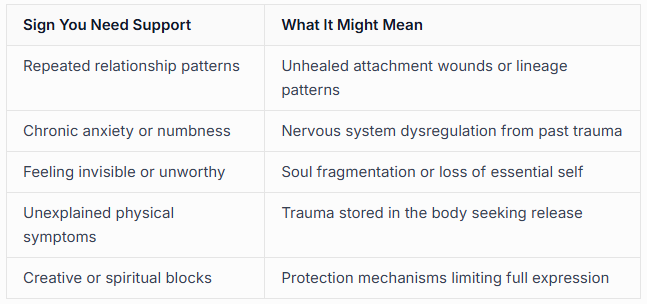
Working with someone who can hold energetic space while you navigate these depths creates safety that allows the soul to reveal what's been hidden. This witnessed healing is often what finally breaks patterns that self-work alone couldn't reach.
Astrological and Karmic Dimensions of Soul Wounding
Sometimes understanding trauma and the soul requires looking at the bigger picture of your soul's journey, including karmic patterns and astrological influences.
Your birth chart holds clues about where your soul may carry wounds from this life and beyond. Certain planetary placements, especially Chiron (the wounded healer), Saturn (karmic lessons), and the lunar nodes (soul path), can reveal themes you're meant to heal and integrate.
Tools like Karmic SoulMap offer insights into these patterns, helping you understand the spiritual curriculum your soul signed up for in this lifetime.
This doesn't mean you caused your trauma or that you deserved it. Rather, it suggests that your soul may have chosen certain challenges to facilitate growth and evolution. From this perspective, even the most painful experiences become part of your spiritual development when approached with compassion and understanding.
Breaking Karmic Patterns Through Soul Awareness
Karma isn't punishment. It's simply the law of cause and effect playing out across lifetimes and lineages.
When you heal trauma at the soul level, you're not just addressing this lifetime's wounds. You're potentially clearing karmic debt, releasing ancestral burdens, and changing the trajectory for future generations. This is profound work that ripples far beyond your individual experience.
The intersection of trauma and the soul with karmic awareness invites a both-and approach: validating your very real pain while also seeing it within a larger spiritual context. You can honor your wounding and recognize your soul's strength in choosing to incarnate with specific challenges meant to catalyze awakening.
The Journey of Reuniting With Your Soul
Healing trauma and the soul is ultimately about coming home to yourself. It's the sacred journey of retrieving the parts of you that were lost, hidden, or given away.
This reunion doesn't happen all at once. It unfolds in layers, each one revealing more of who you truly are beneath the protective armor. Some days you'll feel deeply connected to your essence. Other days the old patterns will resurface, and that's okay. Healing isn't linear, and your soul knows this.
Reflections on the mystical dimensions of this work remind us that the spiritual journey through trauma requires patience, self-compassion, and trust in the process. Your soul has been waiting for you, holding the light of your wholeness even when you couldn't see it.
Signs you're reconnecting with your soul:
Increased capacity to feel both joy and sadness fully
Clearer sense of purpose and what truly matters to you
Stronger boundaries and self-trust in relationships
Spontaneous creative expression or spiritual experiences
Feeling more "at home" in your body and life
Compassion for yourself and your journey
Recognition of your inherent worthiness
These markers aren't destinations but mile markers on the ongoing journey of becoming more fully yourself. Each step you take toward healing trauma and the soul creates more spaciousness for authentic living.
Preparing for Motherhood Through Soul Healing
For women preparing to become mothers or already navigating motherhood, healing trauma and the soul takes on additional significance.
The relationship between trauma and the soul becomes especially important when considering bringing children into the world or raising them with consciousness. Unhealed wounds don't just affect you. They shape how you relate to your children and what you unconsciously pass forward.
Spiritual preparation for motherhood that includes trauma healing creates different possibilities. When you've done the work to address your own soul wounds and ancestral patterns, you become a cycle breaker. You offer your children emotional safety, attuned presence, and modeling of what it looks like to heal and grow.
This doesn't mean you need to be perfectly healed before becoming a mother. That's an impossible standard. It means being committed to your own healing journey so you can show up more whole, more present, and more available to nurture the souls entrusted to your care.
The relationship between trauma and the soul runs deep, touching every aspect of how we experience life, relationships, and our spiritual journey. When we honor this connection and commit to healing at the soul level, we reclaim our wholeness and create new possibilities for ourselves and future generations.
If you're ready to explore how trauma has shaped your soul and discover pathways to profound healing, Intuitive Soul Blossom LLC offers specialized support in generational healing, soul therapy, and spiritual guidance to help you reconnect with your essential self and step into empowered, authentic living.